
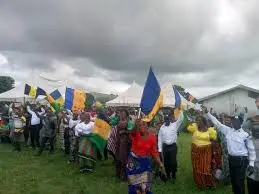
As the Nigerian government accelerates plans to resume oil drilling in Ogoniland after a 32-year hiatus, local communities in this ecologically scarred corner of the Niger Delta are voicing deep-seated apprehensions over potential environmental catastrophe. Despite assurances from federal authorities of job creation, infrastructure upgrades, and revenue boosts to alleviate poverty, residents fear a repeat of decades-long pollution that has rendered farmlands infertile, poisoned waterways, and devastated fisheries. The Guardian UK, in a recent feature, underscored the precarious tightrope walk between short-term economic gains and long-term ecological peril in a region where oil extraction has historically prioritized profits over people and planet.
Background on the Resumption Push
Oil operations in Ogoniland, home to the resilient Ogoni ethnic group in Rivers State, were suspended in 1993 amid fierce protests led by environmental icon Ken Saro-Wiwa and the Movement for the Survival of the Ogoni People (MOSOP). The activism highlighted rampant oil spills, gas flaring, and habitat destruction by multinational firms like Shell, culminating in the 1995 execution of Saro-Wiwa and eight others—a dark chapter that galvanized global outcry. The 2011 United Nations Environment Programme (UNEP) report painted a grim picture: severe contamination of soil, groundwater, and rivers with benzene levels up to 900 times safe limits, mangrove die-off, and health crises including cancer clusters and birth defects.
Fast-forward to 2025: President Bola Tinubu’s administration, grappling with fiscal shortfalls and a national oil output averaging 1.8 million barrels per day, sees Ogoniland’s untapped reserves—estimated at over 1 billion barrels—as a lifeline. National Security Adviser Nuhu Ribadu, leading the charge, announced in May 2025 that drilling would recommence following consultations via the Ogoni Dialogue Committee, which submitted a unified report in September outlining “safe resumption” modalities. Ribadu hailed the move as a “pivotal” step toward security and prosperity, crediting Tinubu’s reconciliation efforts, including a January 2025 summit with Ogoni leaders and Rivers State Governor Siminalayi Fubara. Initial activities, including seismic surveys and site preparations, have begun under the Nigerian Petroleum Development Company (NPDC), with promises of community equity funds and HYPREP (Hydrocarbon Pollution Remediation Project) acceleration.
Yet, the Hydrocarbon Pollution Remediation Project, launched in 2016 to implement UNEP recommendations at a $1 billion cost, lags critically: only 21 of 21 promised sites are remediated, with ongoing spills—692 confirmed in Rivers State since 2016, 60 in Ogoniland alone—exacerbating the crisis. A DW report from November 10, 2025, captured the dissonance: while some youth eye jobs, elders invoke the Ogoni Bill of Rights (1990), demanding resource control and full cleanup before any drill bit turns.
Local Fears and Environmental Risks
In villages like Goi and Bodo West—ground zero for the 2008 spills that displaced thousands—residents describe a landscape of despair. Rivers once teeming with fish now foam with crude; farmlands yield barren soil; and air thick with flares chokes the lungs. “Our lands and water are polluted, no fish in the river… oil drilling brings back painful memories of 4,000 deaths,” lamented Yigale, a Goi fisherman, echoing sentiments from young Ogonis interviewed by DW. The Guardian UK’s piece amplified this fragility, noting Ogoniland’s status as “one of the most polluted places on Earth,” where methane emissions from flaring—60% of Nigeria’s total—drive climate change and health woes, with studies linking spills to respiratory diseases and infertility.
Civil society decries the haste: Environmental Rights Action/Friends of the Earth Nigeria (ERA/FoEN), HOMEF, and CAPPA labeled the plans a “betrayal” in February 2025, warning of “catastrophic consequences” without meaningful consent. A Reuters report from January detailed protests in Port Harcourt, where activists demanded a halt until HYPREP completes remediation—projected for 2027 at best. Recent X discussions, including a viral thread from @iamthegoodfella, highlight parallels in nearby Omoku, where Oando’s takeover threatens community electricity pacts, fueling fears of corporate overreach and corruption siphoning benefits.
Experts like Ledum Mitee of the Niger Delta environmental rights network caution that resumption could spike spills by 2,200+ barrels annually, per ISS Africa data, undermining Nigeria’s net-zero 2060 pledge and exacerbating biodiversity loss in mangroves vital for carbon sequestration.
Government Promises and Stakeholder Responses
Tinubu’s team counters with optimism: Ribadu’s September report promises 10,000 jobs, roads, schools, and a 13% derivation fund share for Ogoniland. Governor Fubara, at the January summit, endorsed “fostering mutual trust,” while a non-partisan October 2025 summit in Khana LGA called for a Multi-Stakeholder Technical Committee including MOSOP, NNPC, and IOCs to craft an “environmental justice” roadmap. International voices, from Amnesty International to the NRGI, urge transparency, tying resumption to full Saro-Wiwa exoneration and UNEP compliance.
As of November 12, 2025, no major disruptions have occurred, but tensions simmer. MOSOP insists on “concrete understanding” post-cleanup, while youth factions split—some supportive if benefits flow, others resolute in resistance.
Broader Implications for Niger Delta and Global Energy Transition
Ogoniland’s saga mirrors the Niger Delta’s $758 million annual degradation toll—75% borne by locals via lost livelihoods. Resuming without robust Environmental and Social Impact Assessments (ESIAs) risks militancy resurgence, echoing 1990s shutdowns that cost billions. Proponents argue it funds HYPREP’s $180 million kickstart for 21 contractors, but critics like Corporate Accountability Lab decry exclusion of diaspora and grassroots voices, labeling talks “insincere.”
Globally, as Nigeria eyes COP30 commitments, Ogoniland tests the energy transition: Can fossil fuel revival coexist with justice? AfriTal’s April analysis warns of methane spikes undermining net-zero goals, urging zero-flaring policies and community veto rights.
Community Demands
Ogoni groups, via the October summit and CSO letters, demand:
- Full Remediation First: Complete HYPREP, including well-water protections and mangrove restoration.
- Inclusive Consent: Transparent consultations per Free, Prior, and Informed Consent (FPIC) principles.
- Equity Mechanisms: 50% revenue retention, anti-corruption oversight, and diversified economy (e.g., eco-tourism).
- Accountability: Release of the confiscated Ken Saro-Wiwa Memorial Bus (held since 2015) and judicial review of historical injustices.
- No New Wells: Immediate cleanup over expansion across the Delta.
Voices from the Ground
- Yigale, Goi Resident: “No jobs, poverty worries me… but our future can’t be traded for more poison.”
- KorneBari Nwike, Center for Accountability President: “The government isn’t sincere—Ogoni voices, including diaspora, must lead.”
- Dr. Chris Barigbon, Bodo Unity Forum: “Healing divisions comes before drilling; justice for the Ogoni Nine first.”
- Suanu T.Y. Baridam, Ogoni Advocate: “Pragmatic partnership, not stagnation— but anchored on the Ogoni Bill of Rights.”


